
 See Our Latest Article on HelloNation
What does it mean when a joint cracks?
For most people, a painless pop, click, or crack is not a sign that a joint is being damaged. These sounds—often grouped under the medical term *crepitus*—can come from changes in pressure within joint fluid, tendons or ligaments moving over nearby structures, or normal contact between joint surfaces. ([health.clevelandclinic.org](https://health.clevelandclinic.org/snap-crackle-pop-need-know-joint-noises?utm_source=openai))
A joint can make noise in several different ways:
- A quick pop: Often related to pressure changes and gas movement in the fluid-filled joint space.
- A snapping sound: May occur when a tendon or ligament shifts as the joint moves.
- A grinding or grating sensation: Can be associated with changes in cartilage, particularly in weight-bearing joints such as the knees.
- Repeated clicking: May be harmless, but its significance depends on whether it is accompanied by pain, swelling, weakness, or restricted movement.
The sound itself is less useful than the symptoms around it. A knee that clicks painlessly while climbing stairs is a different situation from a knee that suddenly pops, swells, and becomes difficult to bear weight on.
Does cracking your knuckles cause arthritis?
Current evidence does not show that routinely cracking the knuckles causes arthritis. Studies and clinical reviews have not found a reliable connection between knuckle cracking and the development of osteoarthritis. ([health.clevelandclinic.org](https://health.clevelandclinic.org/is-cracking-your-knuckles-bad-for-you?utm_source=openai))
That does not mean forceful or repetitive joint manipulation is always harmless. Pulling aggressively on a finger, twisting a painful joint, or repeatedly trying to produce a crack can irritate soft tissues. Some people may also develop temporary soreness or reduced grip comfort if they use excessive force.
A useful distinction is the difference between:
- An occasional, painless crack during ordinary movement, which is usually not concerning.
- A painful crack caused by force, especially after an injury.
- A joint that feels unstable, catches, locks, or repeatedly swells, which deserves closer attention.
The common belief that knuckle cracking automatically causes large knuckles or arthritis is not supported by current evidence. Pain and loss of function matter more than the noise.
Why do joints crack during stretching or chiropractic adjustment?
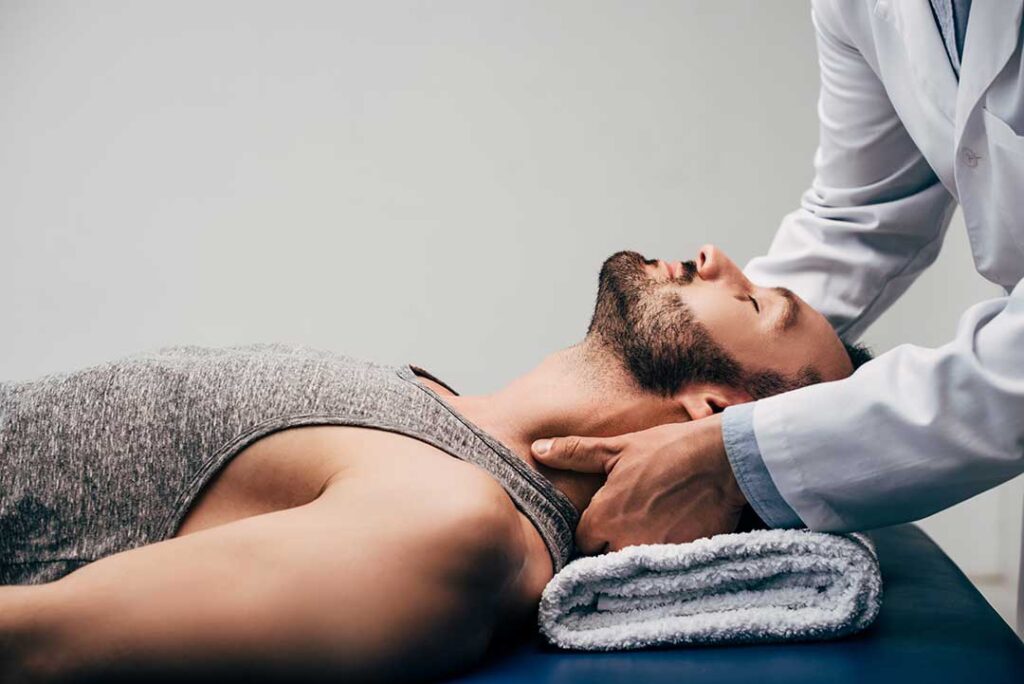
Stretching can change the position of a joint and the surrounding soft tissues, producing a pop. In a manual adjustment, a similar sound may occur when a joint is moved through a specific range. The noise is not proof that a bone “went back into place,” that a joint was “out of alignment,” or that healing has occurred.
A crack can happen without an adjustment, and an adjustment can be performed without an audible crack. The clinical value of any hands-on technique should be judged by the person’s symptoms, movement, comfort, and overall medical situation—not by how loud the sound is.
People should not try to force a crack in the neck or back, particularly if the movement causes pain, dizziness, numbness, tingling, headache, or unusual weakness. Neck symptoms deserve additional care because nerves, blood vessels, and the spinal cord are located in a relatively small area.
When is joint cracking a sign of a problem?
Cracking deserves medical evaluation when it is accompanied by pain, swelling, warmth, bruising, instability, or a noticeable change in movement. The Arthritis Foundation notes that noise combined with pain or swelling can indicate a mechanical problem or disease activity involving structures such as cartilage. ([arthritis.org](https://www.arthritis.org/health-wellness/about-arthritis/understanding-arthritis/what-causes-noisy-joints?utm_source=openai))
Pay closer attention when:
- A joint began cracking immediately after a fall, collision, or twisting injury.
- The joint repeatedly locks, catches, gives way, or cannot fully straighten.
- Swelling develops after ordinary activity or remains for several days.
- Pain wakes someone at night or steadily worsens.
- There is numbness, tingling, weakness, or loss of coordination.
- A joint is hot, red, very swollen, and painful.
- Walking or putting weight on the joint becomes difficult.

Osteoarthritis can involve grinding, cracking, or grating sensations, along with pain, swelling, and reduced range of motion. However, joint noise alone does not establish a diagnosis. Imaging findings also need to be interpreted alongside symptoms because structural changes may exist without causing pain. ([health.nih.gov](https://health.nih.gov/health-topics-a-z/osteoarthritis?utm_source=openai))
What should residents do about painless popping?
Painless joint sounds usually do not require treatment. Instead, observe whether the joint moves normally and whether the sound changes with activity, fatigue, footwear, work demands, or exercise.
For local residents managing seasonal outdoor work, winter walking, home maintenance, or long periods of sitting indoors, practical steps include:
- Keep joints moving regularly rather than remaining still for long stretches.
- Increase exercise gradually, especially after a less active winter.
- Use a gentle warm-up before lifting, shoveling, gardening, or recreational activity.
- Avoid repeatedly forcing a joint to crack.
- Notice whether poor sleep, stress, or muscle fatigue changes the sensation.
- Track swelling, pain, or reduced motion if symptoms persist.
Movement generally supports joint function, but “pushing through” sharp pain is not the same as healthy activity. A low-impact routine may be more comfortable during a flare, while persistent symptoms may require a medical assessment to identify the cause.
Is cracking more common in the knees, shoulders, or back?
Yes, because these areas move through large ranges and contain multiple tendons, ligaments, and joint surfaces. Knees may click during stairs or squatting. Shoulders can snap as the arm moves overhead. The spine may produce popping sounds during rotation or stretching.
The location helps provide context, but it does not determine whether the sound is harmless. A painless shoulder click with full strength is different from a shoulder pop followed by weakness. A back crack after stretching is different from new back pain with leg weakness or numbness.
A chiropractor, physical therapist, primary care clinician, or orthopedic clinician may assess movement, strength, tenderness, injury history, and neurological symptoms. The appropriate type of evaluation depends on the body region and the warning signs present.
When should joint cracking be treated as urgent?
Seek prompt medical care for a hot, swollen joint accompanied by fever or feeling unwell, because infection and other inflammatory conditions can require rapid treatment. Immediate evaluation is also appropriate after a major injury when there is severe pain, deformity, inability to bear weight, or numbness around the injured area. ([nhs.uk](https://www.nhs.uk/symptoms/joint-pain/?utm_source=openai))
For less urgent concerns, arrange an evaluation if pain, swelling, stiffness, or limited movement does not improve or keeps returning. The key question is not simply, “Why did it crack?” It is whether the joint remains comfortable, stable, and functional before and after the sound.
